Japan
Kagoshima
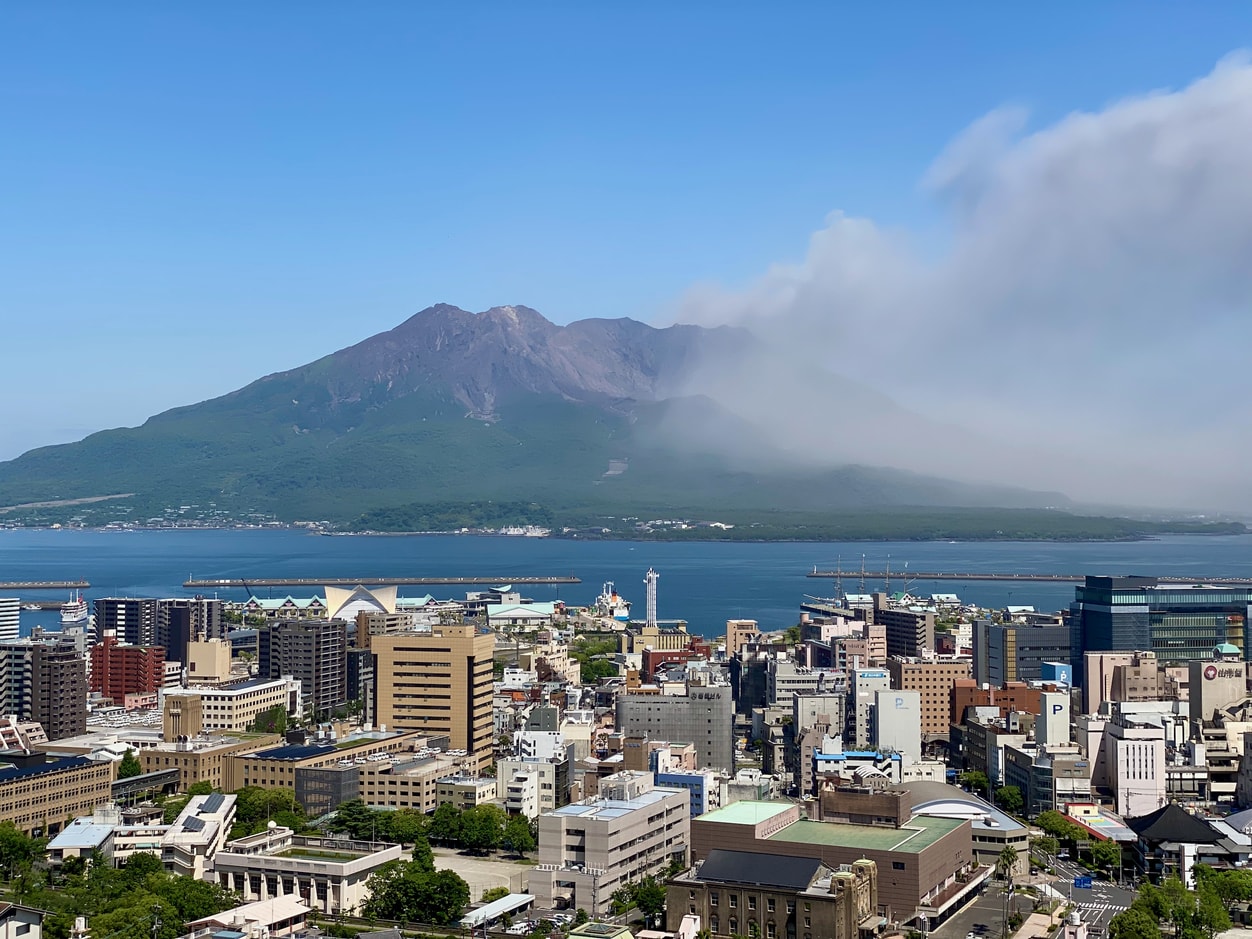
Coastal Kagoshima overlooks the most active volcano in Japan, called Sakurajima (I think literally Cherry Blossom Island).01 It erupts almost every day. This apparently doesn’t worry most folks, so we didn’t let it worry us. The photo at the top of this page is this mountain, erupting as usual on our first day in Kagoshima.
On the ground, Kagoshima housed the friendlist people we met in Japan. Off the dome:
- A man on the mountain overlook who asked about us and wanted to talk about his children
- The bakery guy running around and wanting to chat and recommend products to us
- Another foreigner couple, UK in origin, bantering with us walking the evening streets02
- A couple running an incredible grill, who would invite us to spend the whole next day with them (more below)
Look, I’m not going to sit here and tell you this is inherent to Kagoshima. A several days’ trip is a random walk along twenty experiences out of millions of possibilities. Whether you get lucky leads to a whole different perception of a place.
But luck having good interactions seemed to abound in Kagoshima.
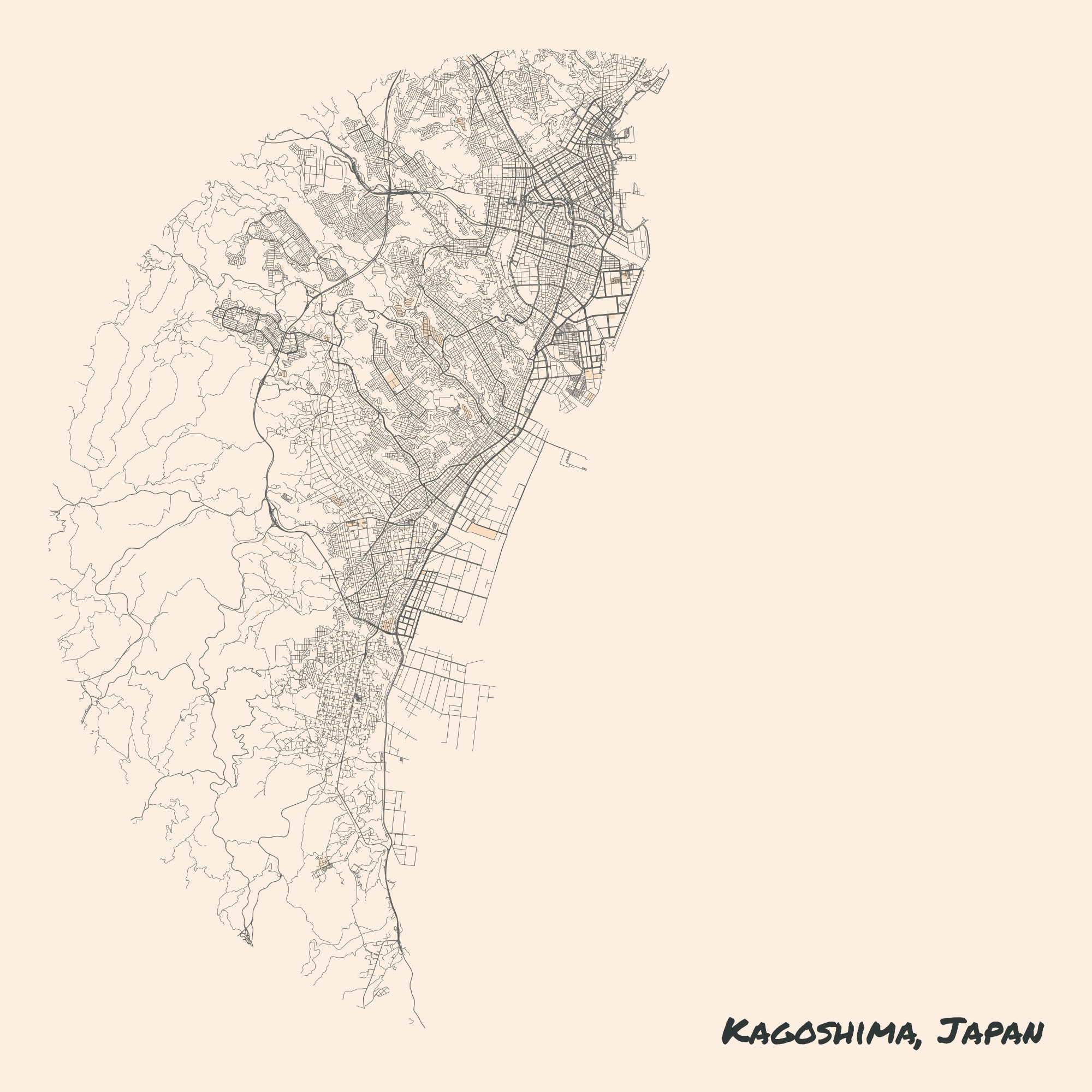
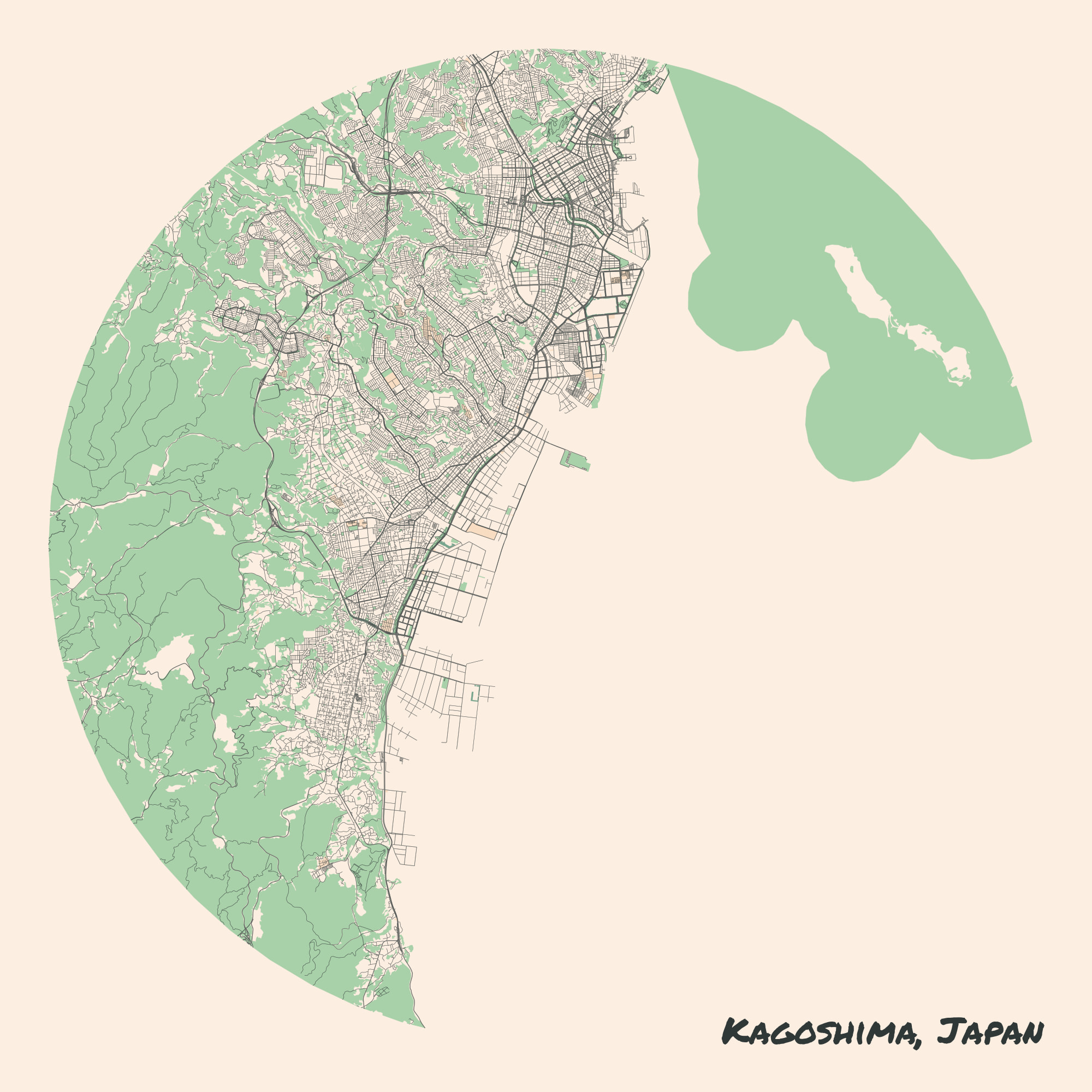
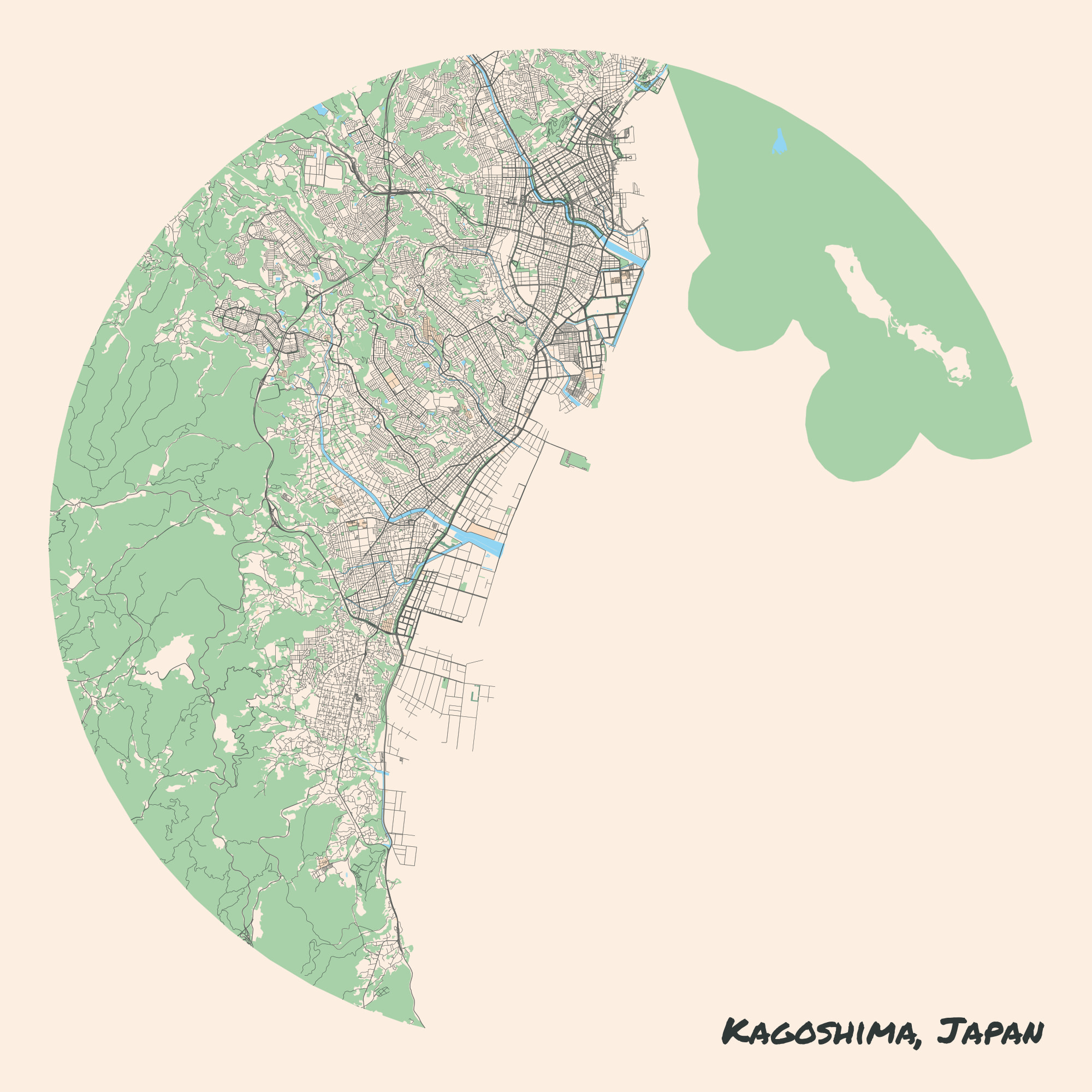
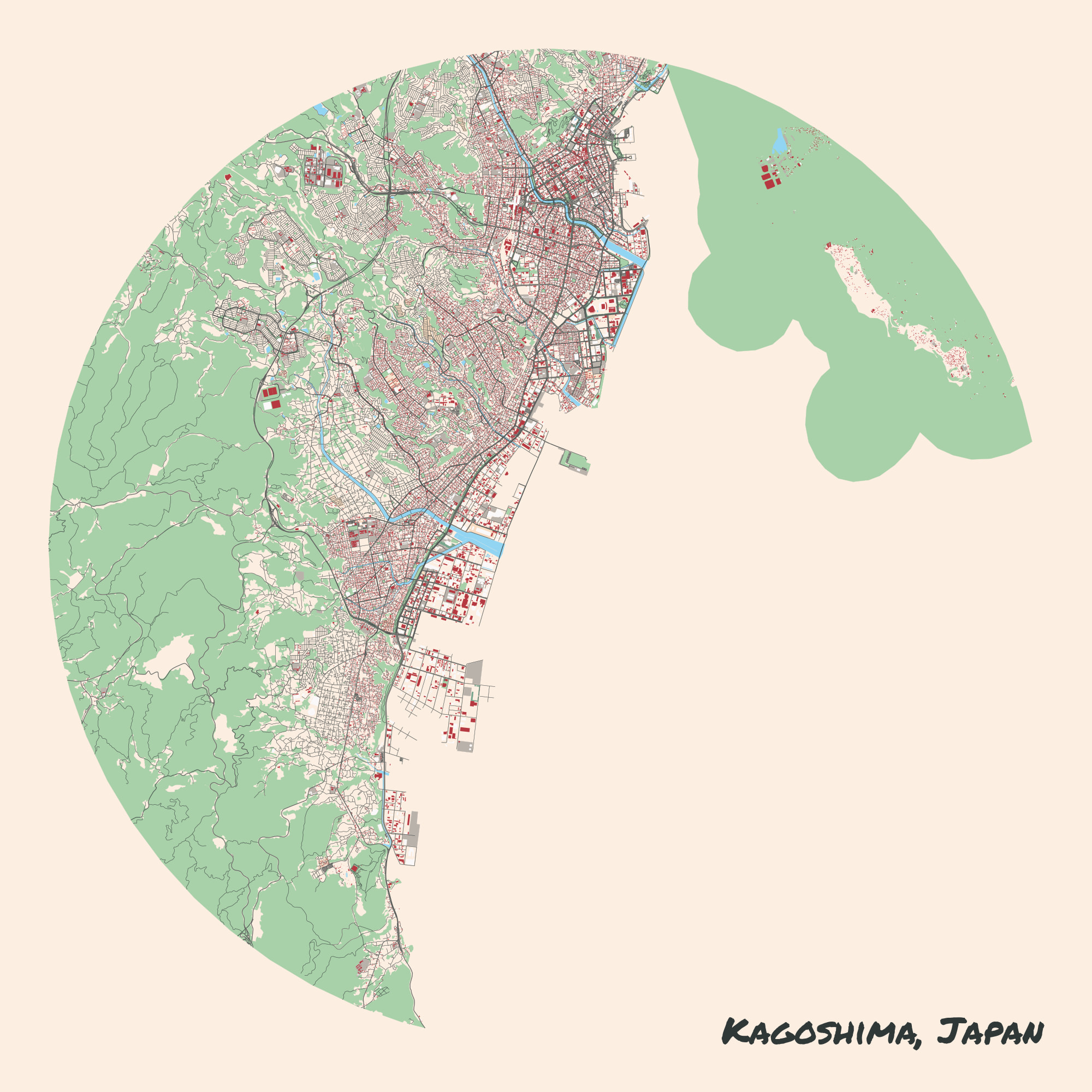
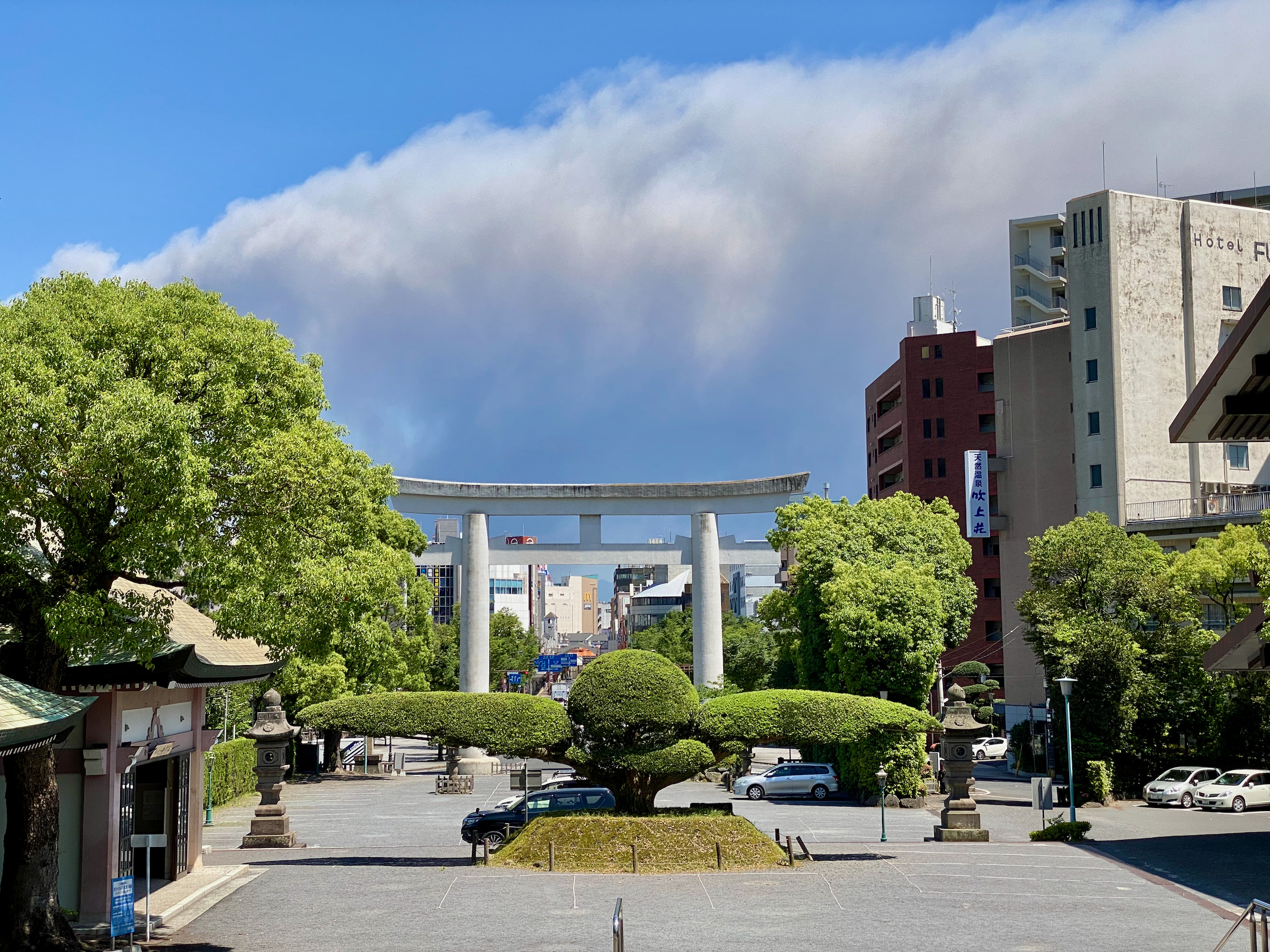
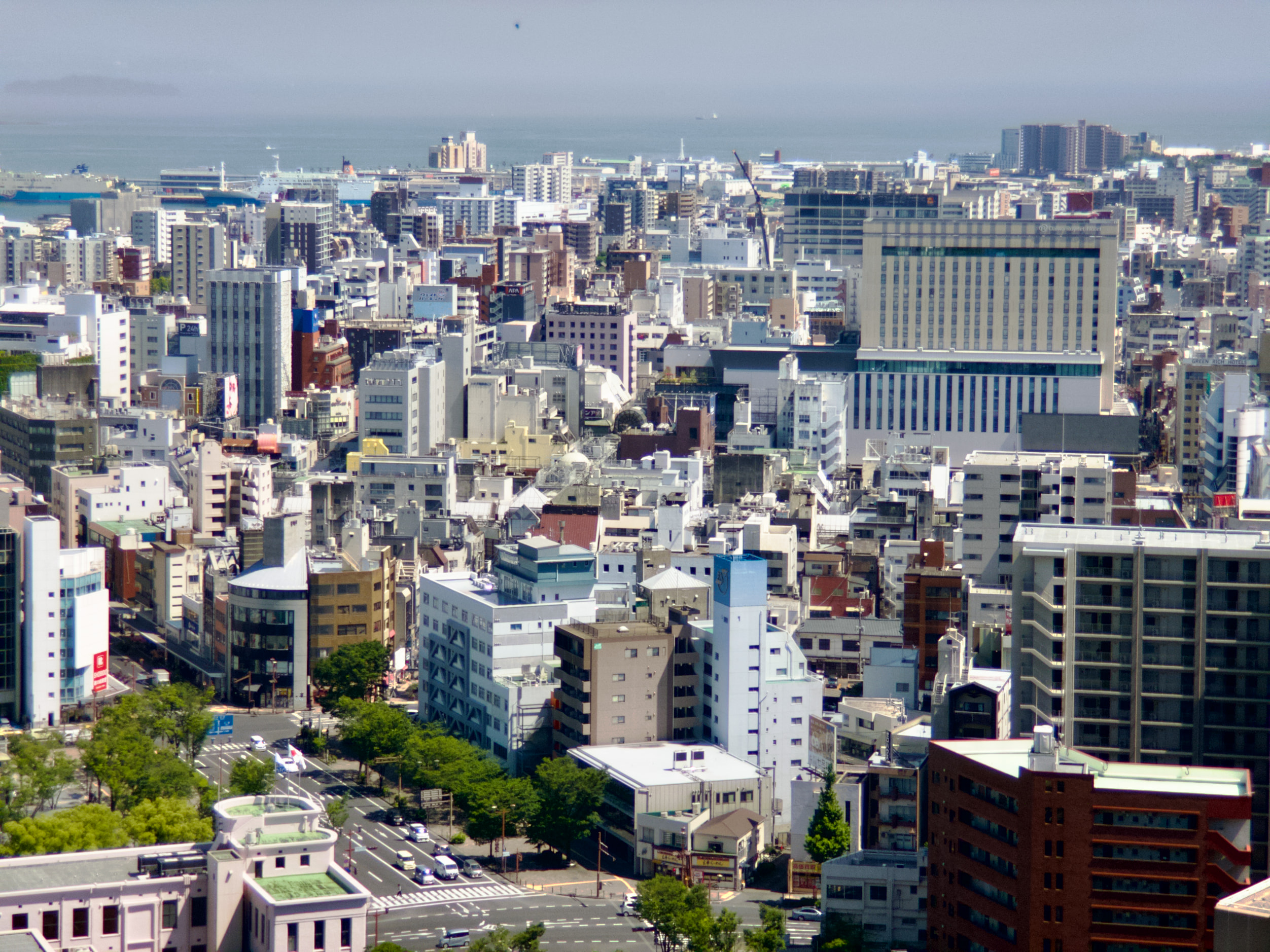
I’ve held this theory for a while that ~600k population is a sweet spot for cities. Evidence: Seattle, Copenhagen, and now Kagoshima. Counterargument: I’m from Seattle, so I’m biased to like cities of its size. Fair enough. But let me theorize why: a city of this size contains both city and town multitudes: large enough for public transit and big city comforts; small enough you can still feel its lingering small-town character, like friendly people and old communities and liminal spaces (more below).
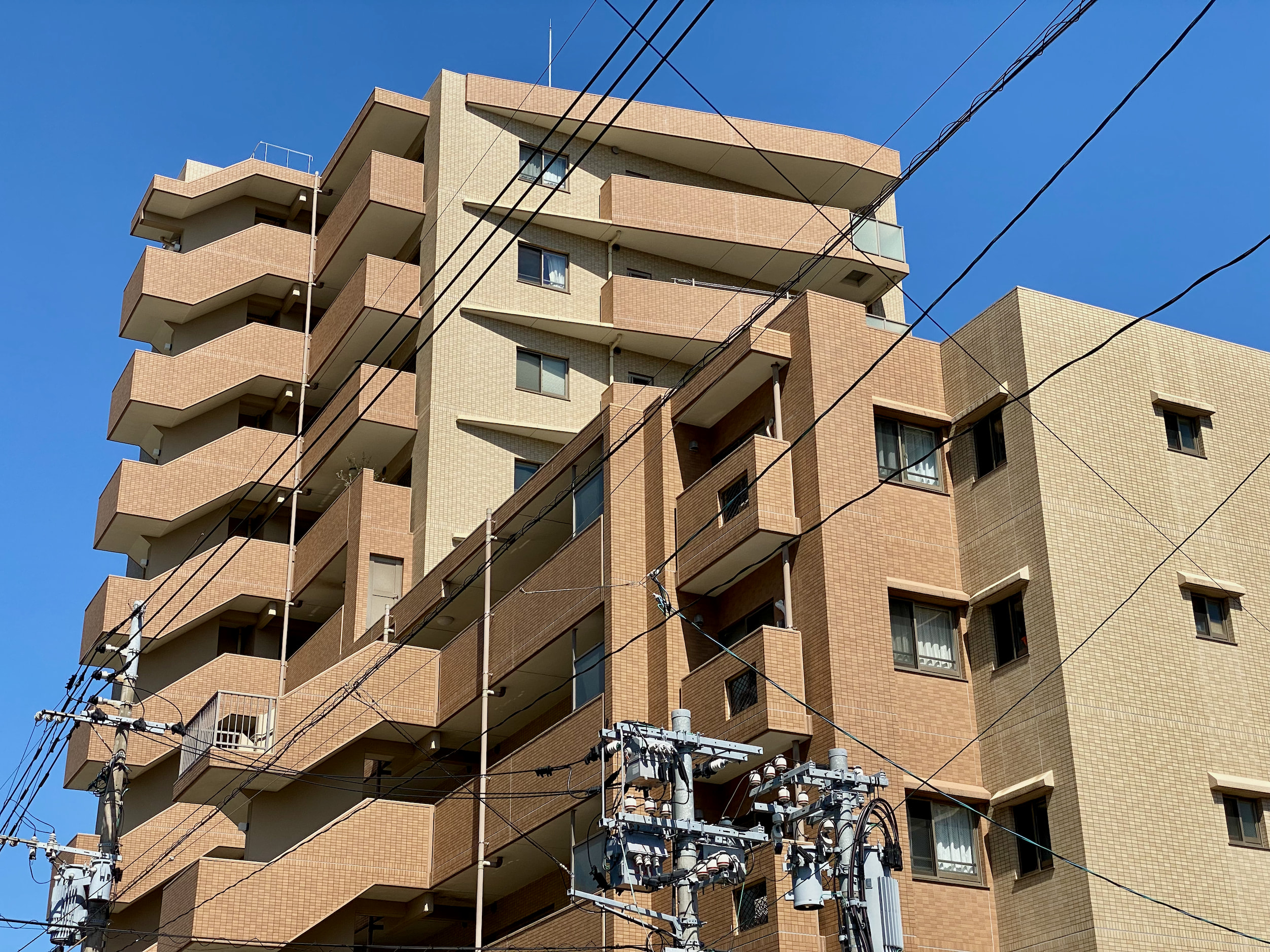
Belatedly Introducing: Kyushu
At this point, it’s worth introducing a word we’d become extremely familiar with by this point: Kyushu.
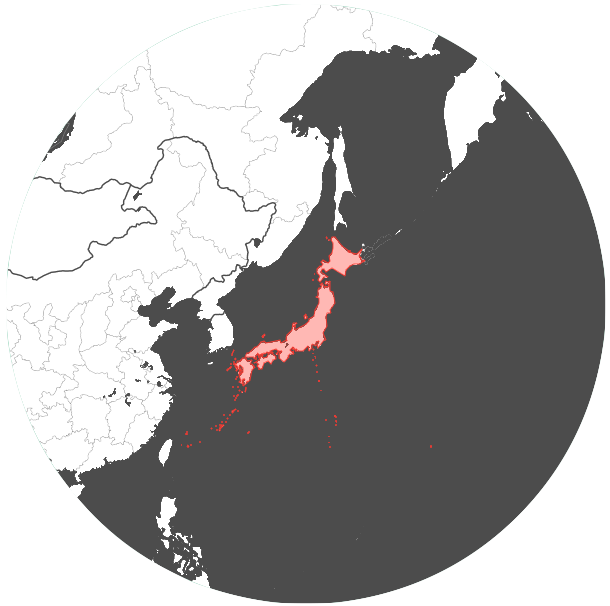
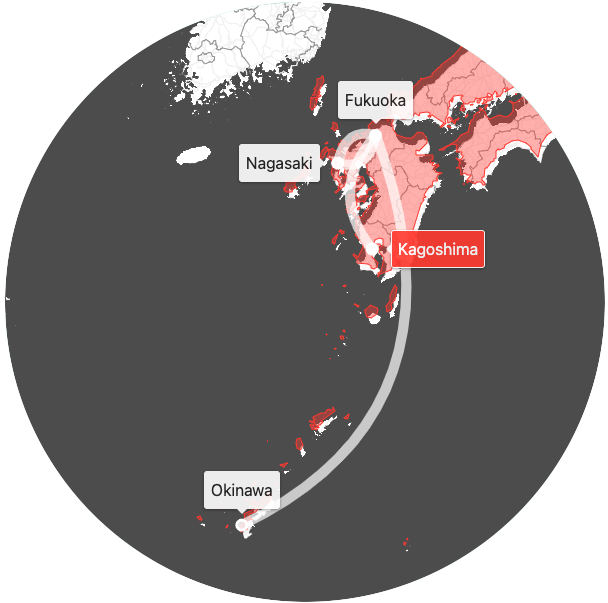
Japan has four main islands, and Kyushu is the bottom-left (er, southwest) one that houses Fukuoka, Nagasaki, and Kagoshima.
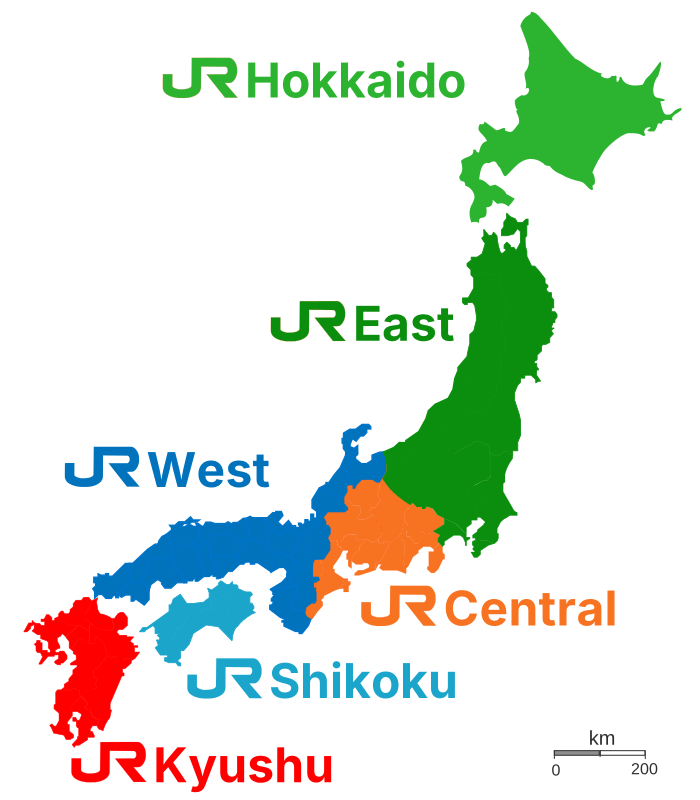
This is also a nice graphic of the four main islands. Kyushu, Shikoku, and Hokkaido are the three smaller ones, and the rest (West, Central, East) split up the big main island. Source: Vladsinger (CC BY-SA 3.0) via Wikipedia.
Why does this matter? Well, Japan’s whole big mondo national-ish train conglomerate JR (aka JR Group aka Japan Railways Group) has actually been exploded into a bunch of companies, some fully private (publicly traded) and some fully public (state-owned), with marginally different passes and branding and ticket offices for each.03 These are the kinds of details you’d generally like to not know, but will be forced to account for when planning, because, e.g., JR Kyushu (where we were) offered various Kyushu-only unlimited rail passes to foreigners at different price points for different time durations, available for purchase only at specific locations and with proper documentation. These train tickets aren’t cheap so it’s worth the research.
This is the final post of the Kyushu leg, so I’d like to formally apologize to Kyushu for introducing it so late. After Kagoshima, we’d begin a meandering by-train journey that would end up taking us all the way from here to Hokkaido.
Japan’s Arcade Infatuation
An unexpected thing I learned this trip is that, infrastructurally, Japan appears to be obsessed with arcades. Not the beep boop kind, but like a semi-indoor mall: a shop-lined corridor with an elongated arched glass roof. These extend longer than you’d expect, branching out and intersecting other arcades.
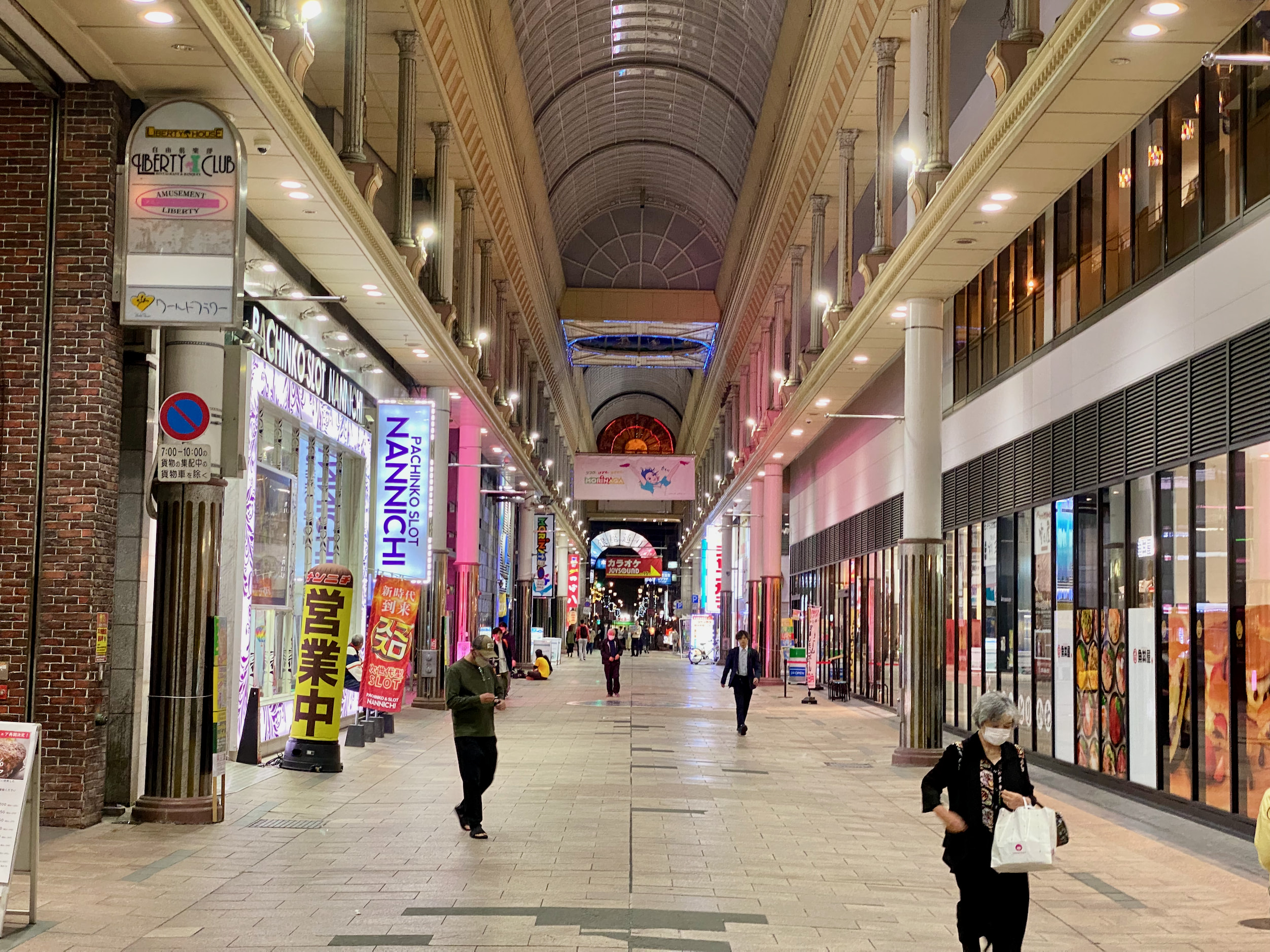
I found arcades interesting because they were a fundamentally new genre of place for me. This doesn’t happen often by your thirties. So I’d walk into them with an eerie lack of preconceived notion. Was this basically like walking through a mall? Or was it more like walking down a street? Was this fancy or cheap? Do people like hanging out here? Are people like, ooh, please build more arcades, or more like, god, not another arcade? (I still don’t really know the answer to these questions.)
Medium Cities, Liminal Spaces
There’s a funny spectrum for how developed a place is which I think kind of dictates how much freedom you have to walk around. In central areas of somewhere like Tokyo or NYC, every square meter is accounted for, so you don’t find yourself venturing into ambiguous territory. And a rural place is so undeveloped that you can walk practically anywhere and it’s nothing exciting—you’re just walking into a field or some woods. But a medium-sized city is a sweet spot where you can explore liminal spaces, the lines between public/private or allowed/forbidden not so carefully drawn or enforced because they don’t yet need to be.
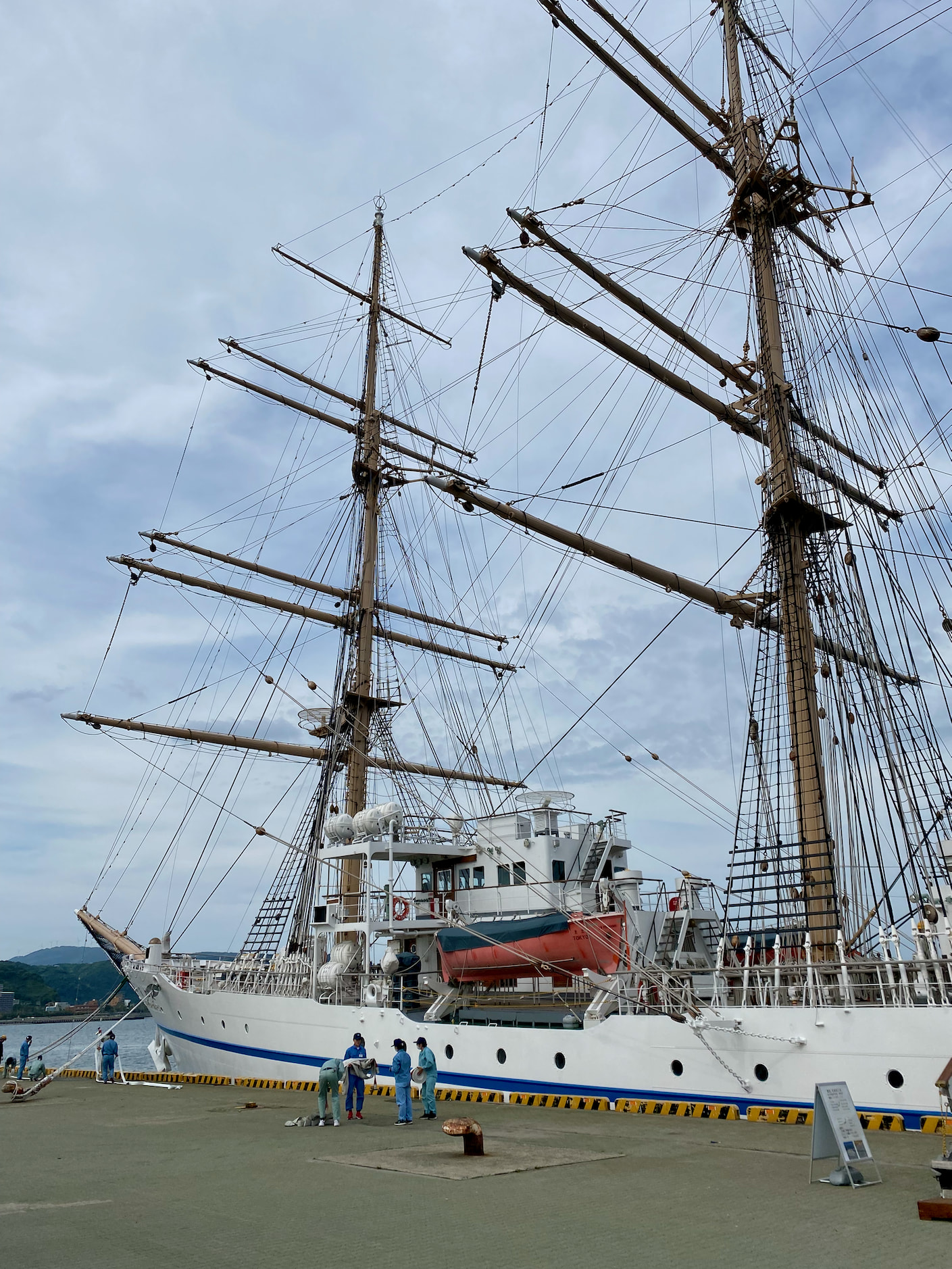
It was through this phenomenon that we found ourselves, for example, discovering a shipyard with a cool boat that looked both old and new, enormous empty masts exploding into the sky, workers going about doing various things. We just wandered right in.
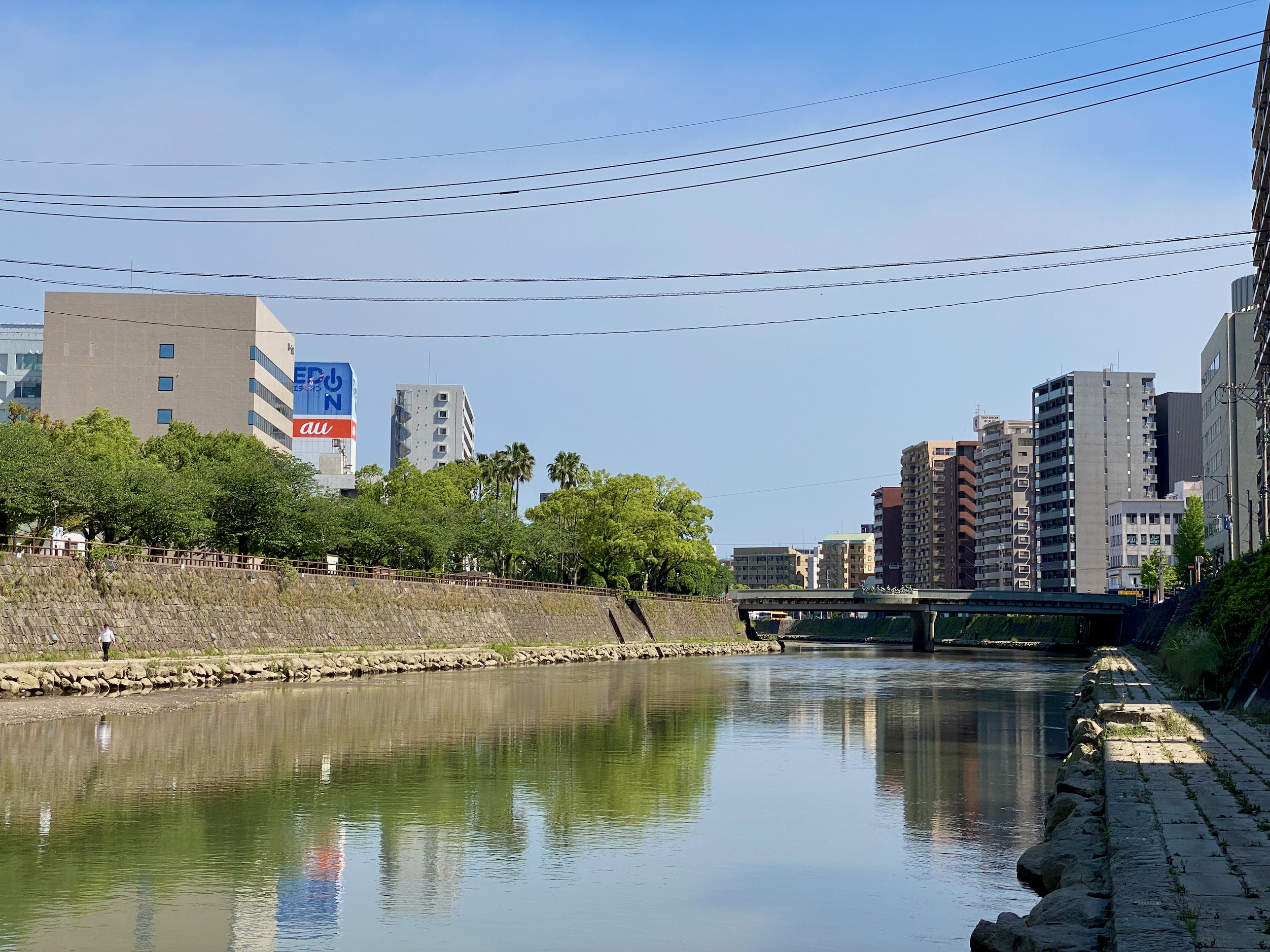
Or, for example, when strolling the canal, we found tunnels we could just walk into. Was it dingy? Absolutely. But it was just open and there. The thrill!
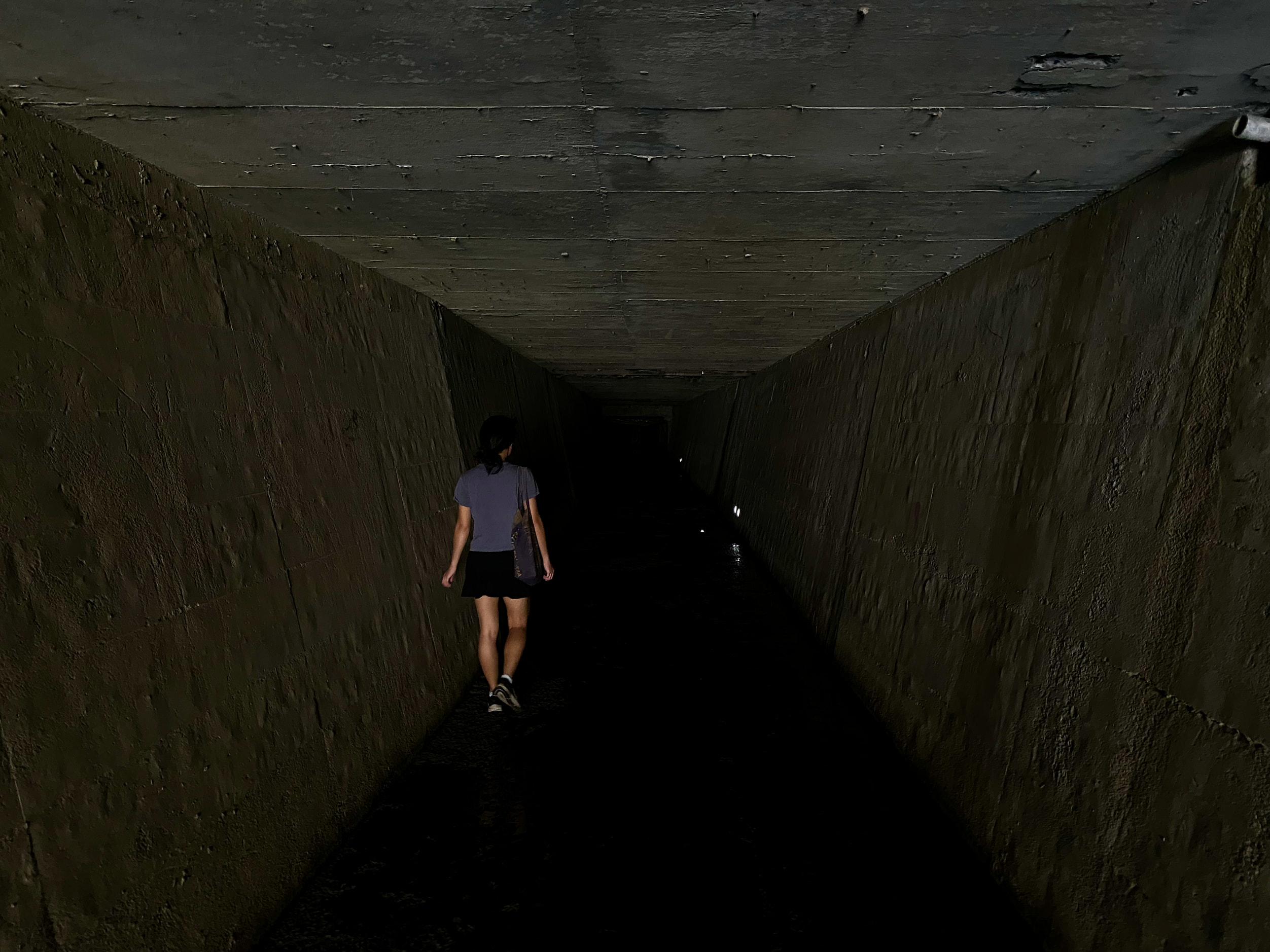
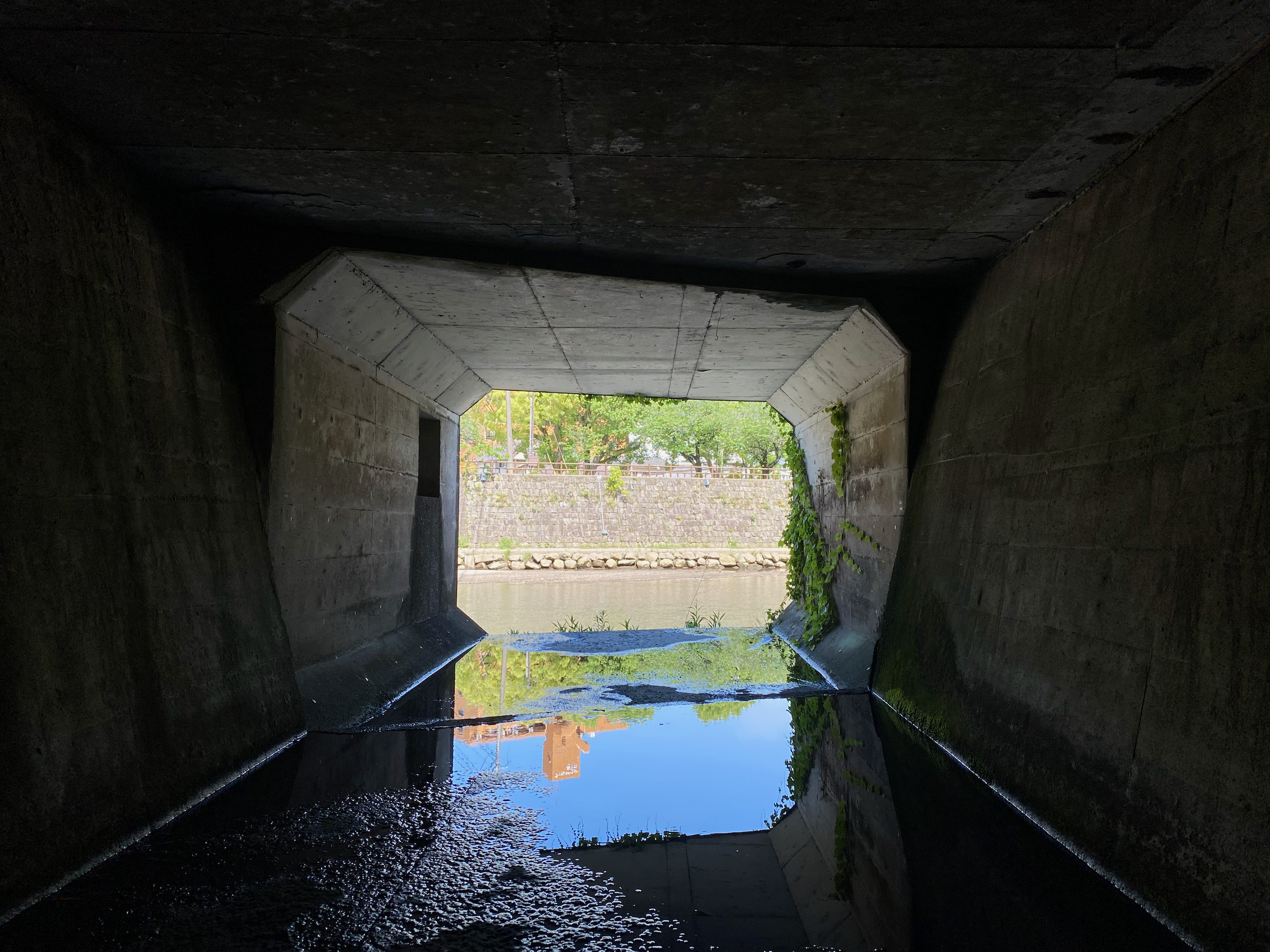
Imagine how incredible this would be as a childhood hideout.
Plaques: Machine Translation’s Final Frontier
Behold this unique statue and Google’s attempt at deciphering its inscription.
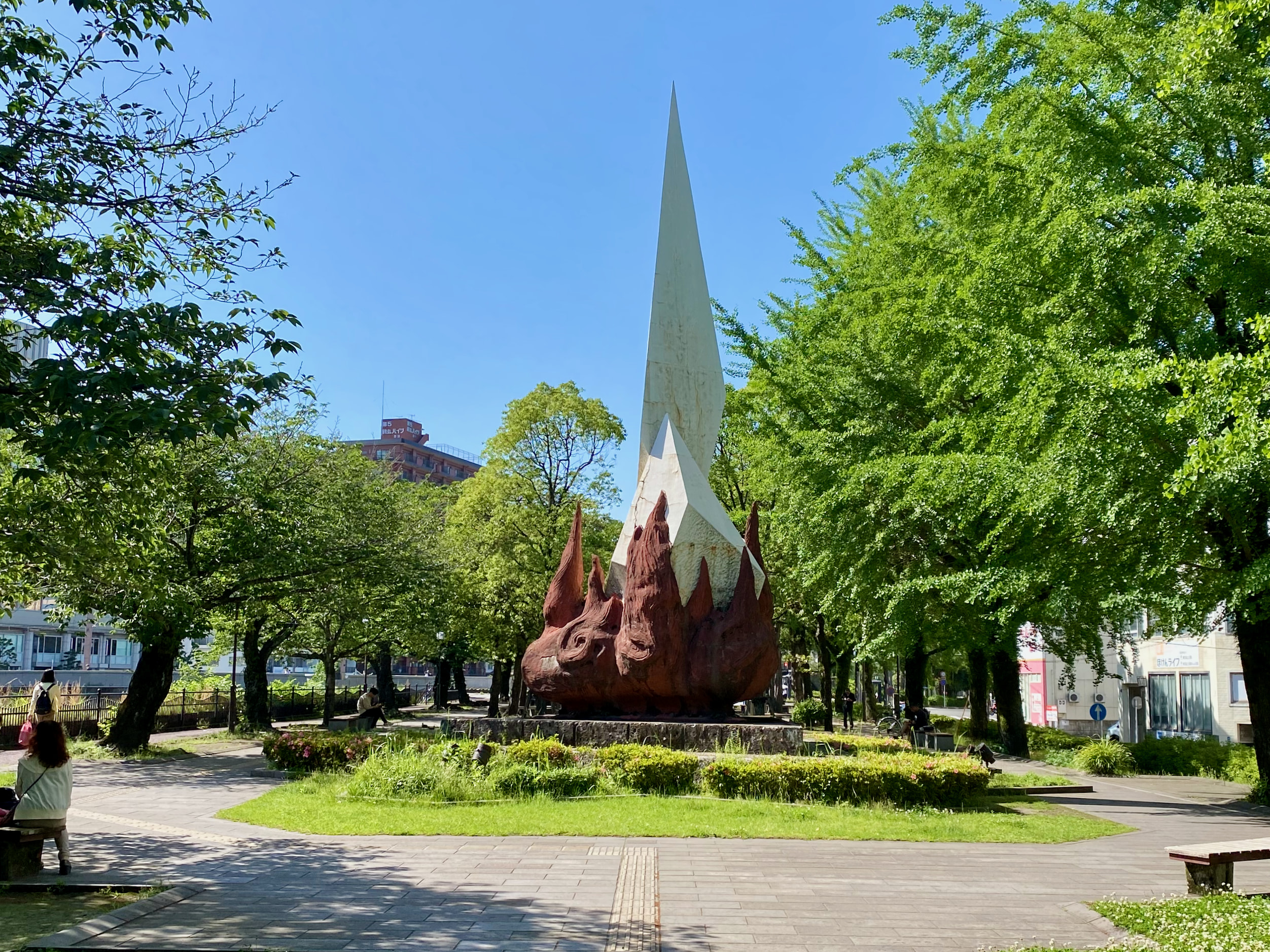
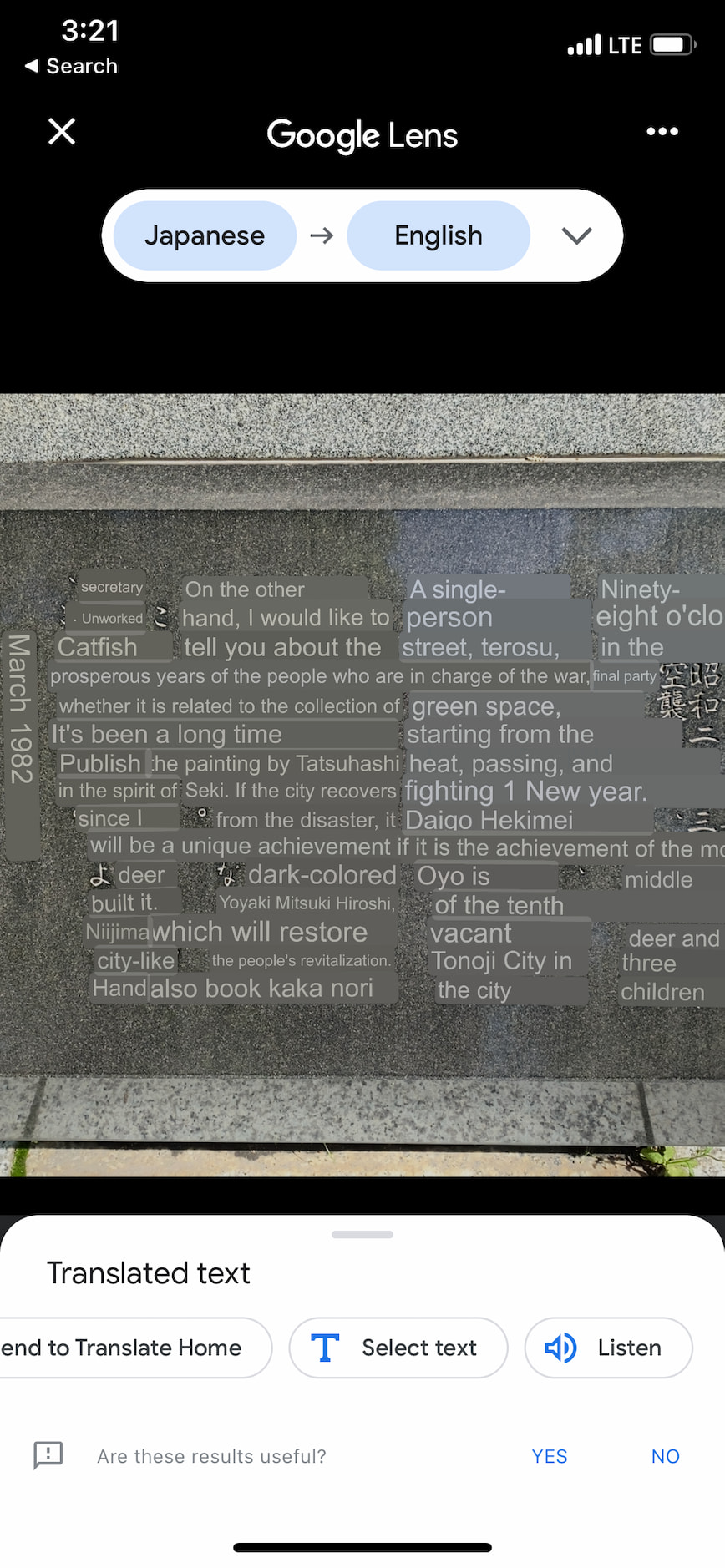
You get kind of a word cloud overview.
Would You Like to Come Pick Bamboo Shoots?
The most meaningful experience we’d have the whole Japan trip happened right here in Kagoshima.
Kagoshima is known for its beef. We popped over to a well-rated grill, and I asked in broken Japanese if they had any tables. A woman came over and said, no, but tomorrow? I said, 7pm? Sure thing.
We came back the next day and had the most delicious dead cow I have put in my face in my few years on this planet. I will spare you words, because the taste is gone from my memory, and only the memory of having had such an incredible taste remains.
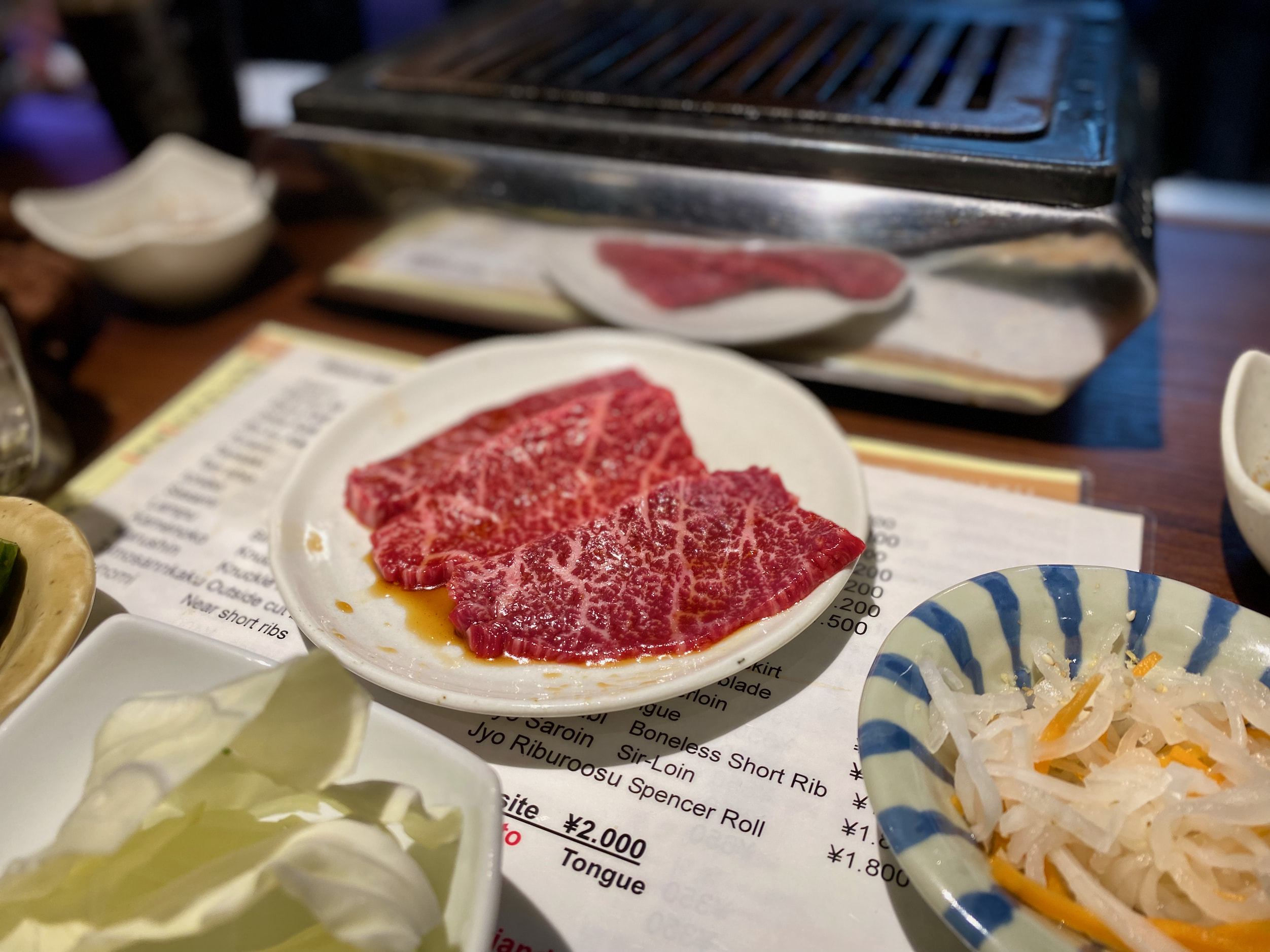
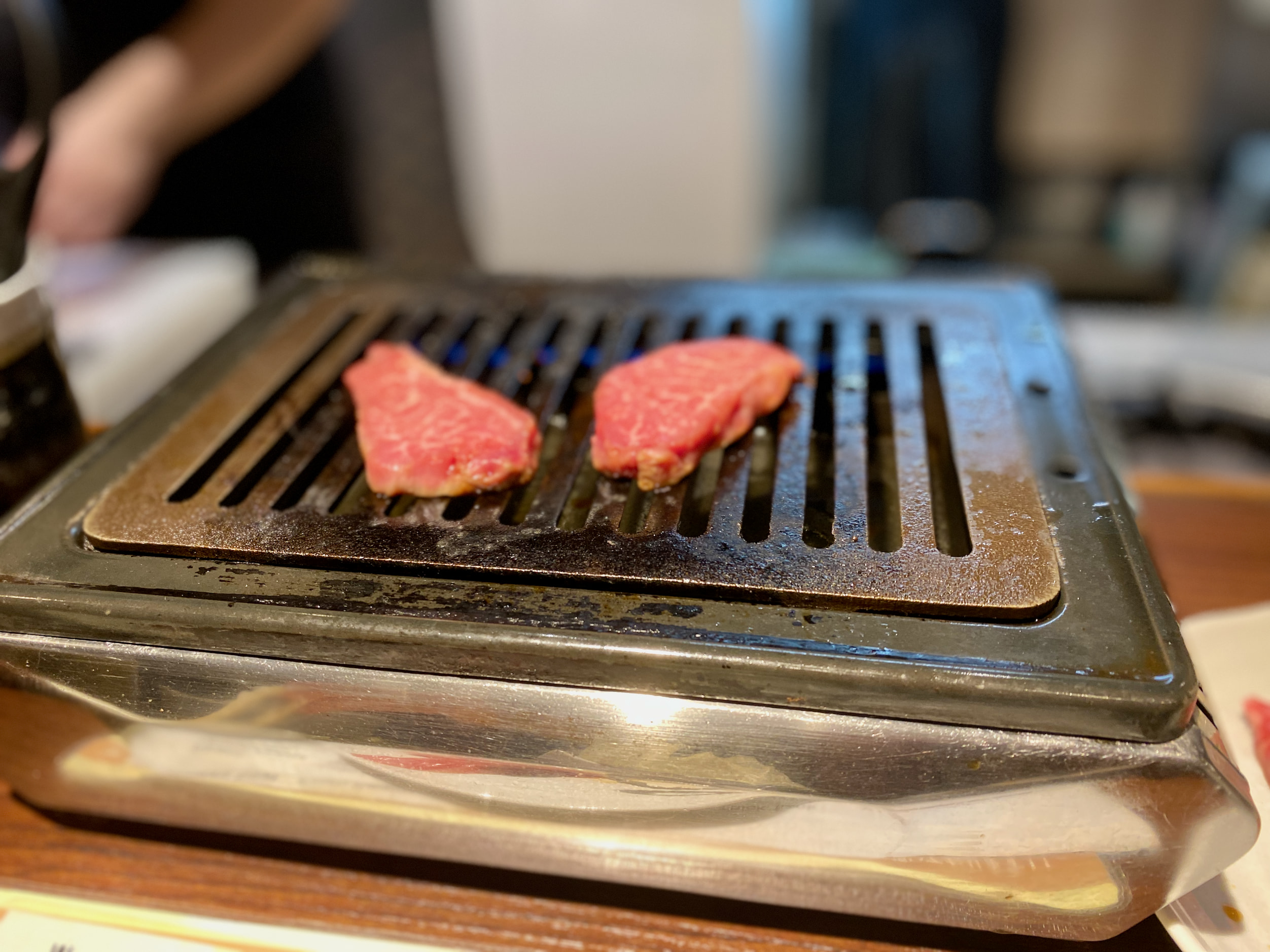
LOOK AT THAT MARBLING. I’m not a beef fiend. I eat steak like once a year. But this… I mean, so marbled and thinly sliced, just the right amount of sauces… words fail me. Only ellipses seem appropriate.
As we eat, we chat with the man slicing the meat and the woman preparing everything else. The restaurant is busy, but we were sat right at the counter, the way you’d see in a sushi bar. I don’t recall what we talked about, but I’d have to guess that one or two beers helped me maximally attempt communication.04
Nearing the end of the meal, they asked us, do you want to come pick bamboo shoots with us tomorrow? We had no idea what that entailed, but we had no plans, and we immediately said, yes, sure, if it’s not a bother! They procured a business card, we exchanged numbers, and arranged to meet at 8am the next day.
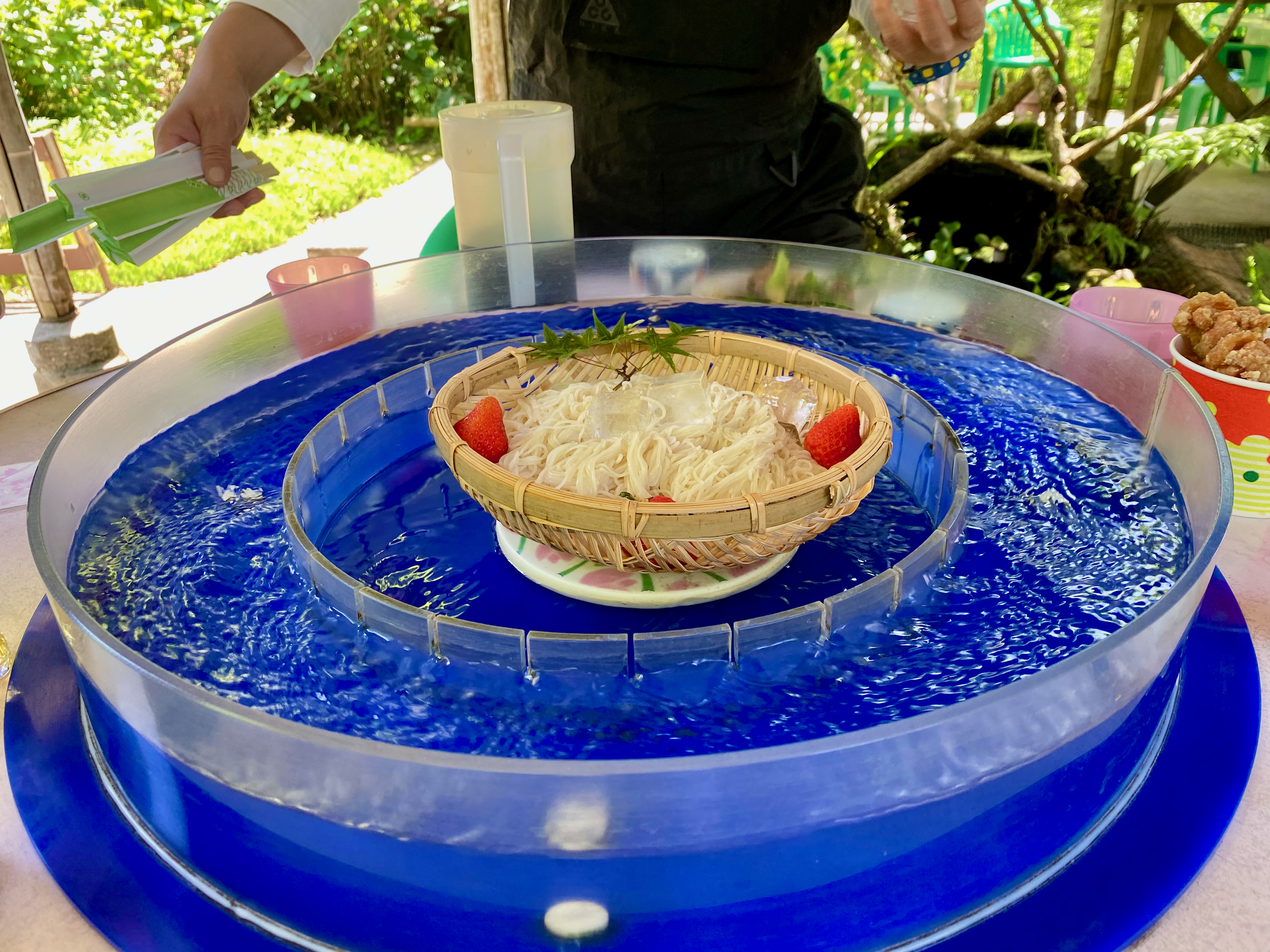
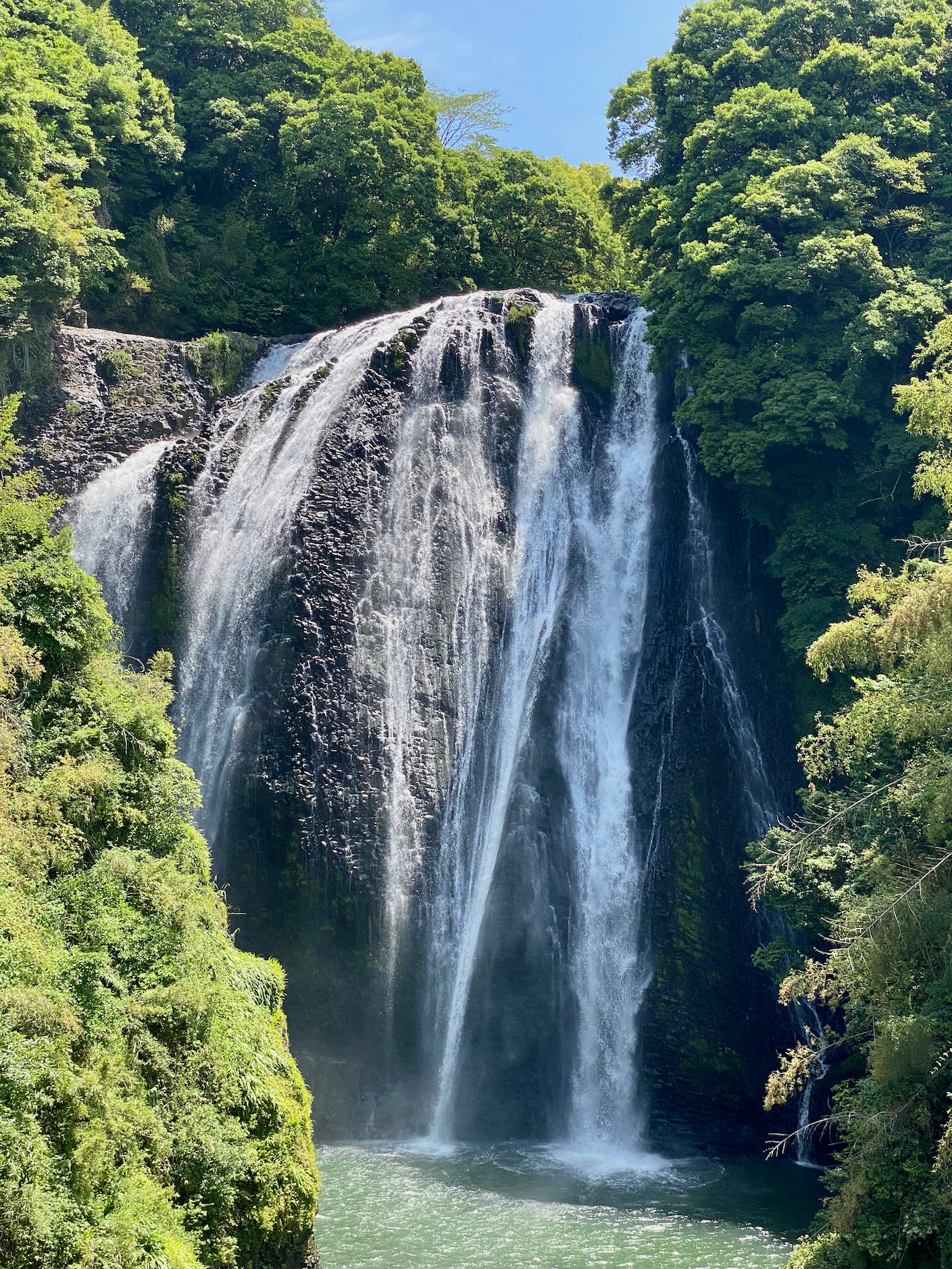
We would end up spending the whole day together. First they drove us to a spot for lunch with a great waterfall view, and noodles that spin around a water shoot that you snatch out with your chopsticks. It even served raw chicken, which we gingerly sampled, and they finished (saving us face by saying, oh, it’s better not to each too much, you might get a stomach ache).
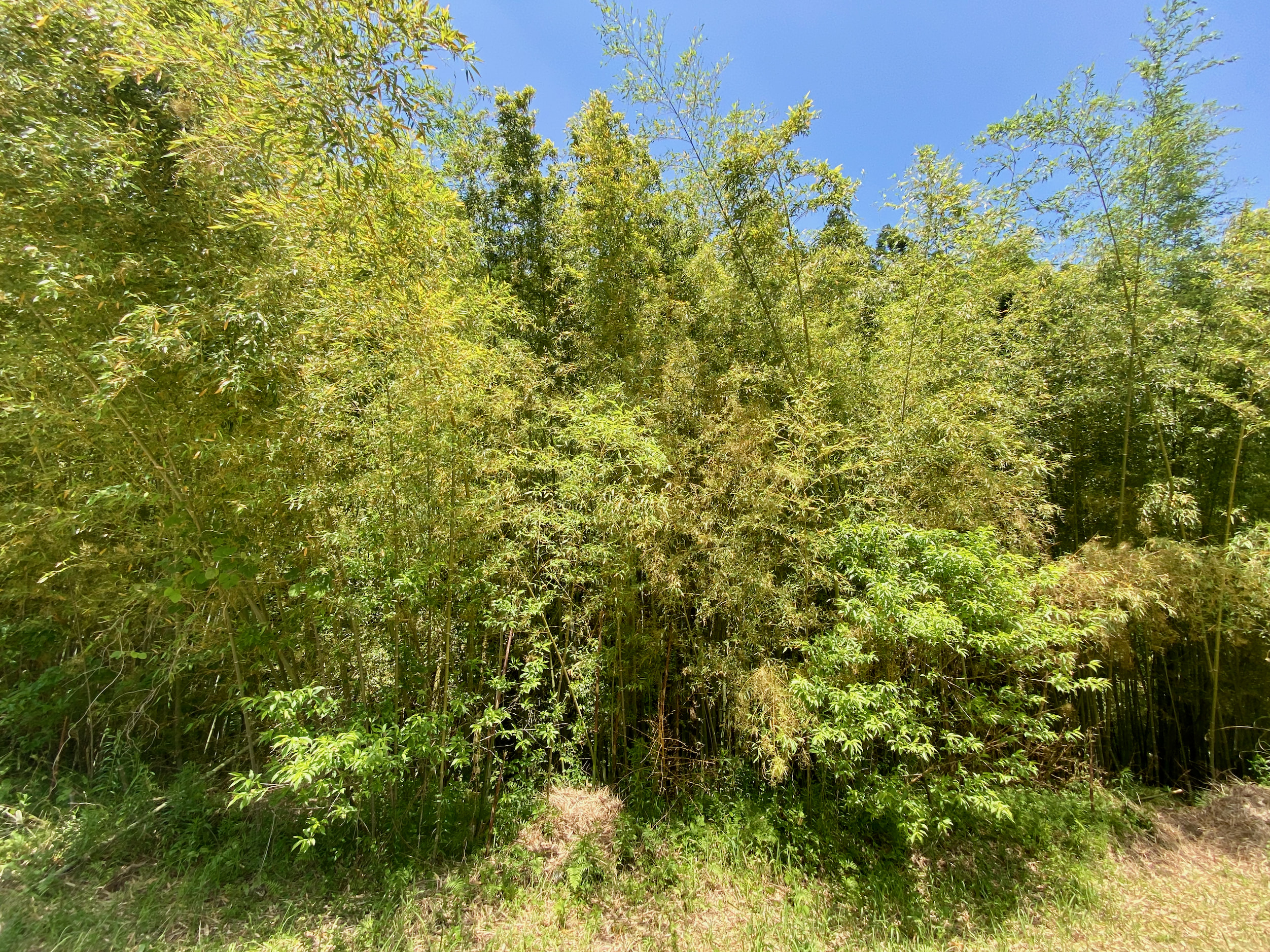
After several shorter stops (a hardware store out in the burbs, an ice cream and coffee break), we made it out to a forested area, and started the highlight activity of the day: picking bamboo shoots! I rolled up my sleeves and prepared for an hour or three of manual labor. I wanted to work, to help out, to somehow pay back the hospitality and generosity we were being shown for exactly no reason other than our status as visitors.
But it turns out picking a small amount of bamboo shoots takes only about two minutes.
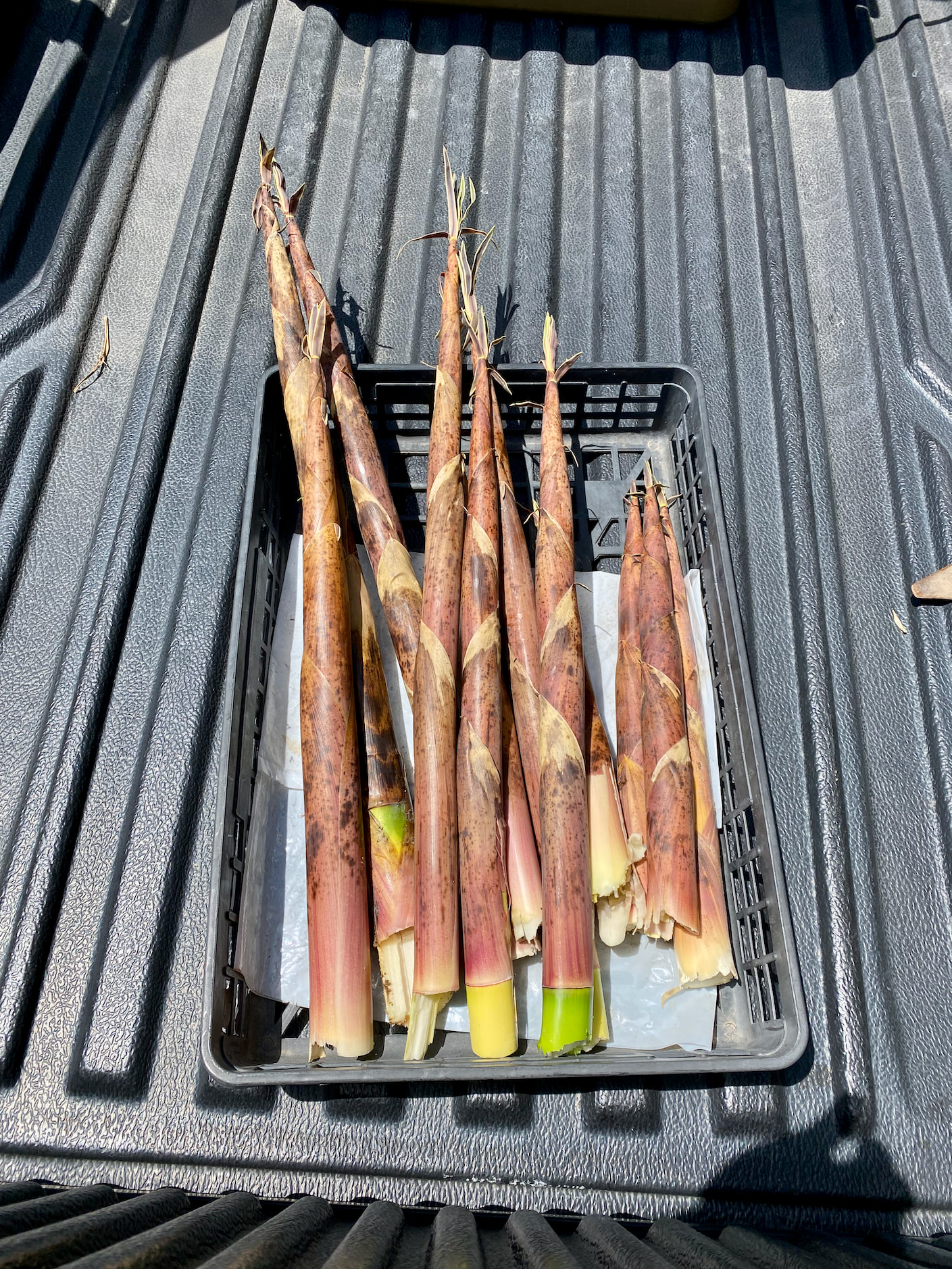
Afterwards, we went to one of their parents’ places to prepare and cook the bamboo shoots. A real home! It was fascinating to see the inside of an older house. So much stuff! Old photos of those long past, books piled around, withering appliances, small tables, a compact kitchen, a small yard. The mom accepted our unexpected presence with grace.
Let me tell you, trying to be polite is an immense challenge when you’re battling not only extremely low levels of speaking and comprehension, but a totally different cultural world. I constantly feared they’d assumed greater Japanese fluency from our dinner last night than I truly possessed. Google Translate was used constantly, with agonizing slowness and inaccuracy and rudeness.05 I wasn’t even sure exactly what to call them—I assumed Last name-san was the correct approach, but I wasn’t clear on whose last name was whose and, as these things go, it quickly felt too rude to ask.
Communication challenges cropped up in myriad ways. For example, they’d ask if I liked alcohol. I’d think, OK, sure, but I don’t need them to try to get any for me, but I also don’t want to say no if they want to have a drink. Unable to render any nuance, I’d just say something like, “Yes. But, everything’s good!” And then they’d start scouring the place. “Do we have any alcohol? We can go buy some.” Cut then to my panicked attempt at talking them down, etc.
Despite all this, we did cover a lot of ground—trips we’d all taken, friends and family, likes and dislikes, what we were doing in Japan. We all did our damndest during several hours in the car.
So, of course, many emotions I remember were embarrassment and wishing I was more skilled at their language. But the strongest feeling was one of such gratitude towards this couple for spending their one day off in the week to give us a day we could never have asked for.
As they dropped us back off at our AirBnb at sunset, Julie and I both composed fervent thank-you messages on Google Translate, which it butchered. We gave them some store-bought biscotti I had picked up after much urgent deliberation the night before. After this kind of experience, you really feel, wow, I have to pay this kind of generosity forward, somehow, sometime, even though it will be to someone else and this couple will never know. That this feeling arises in you is something that gives me deep hope in humans.
Footnotes
It actually was an island, until 1914 when the volcano erupted enough lava to connect itself to the mainland. There are now roads on this cooled lava. THIS IS FINE. ↩︎
It counts! Fellow foreigners in Japan regularly have weird vibes ↩︎
I say has been like it was a recent change. In fact, the slow-motion JR explosion took from 1987 to 2016. ↩︎
I’d been quite studiously learning Japanese for about a year at that point, which meant I could occasionally perform toddler-level speaking, and even worse listening. ↩︎
I knew just enough to know when Google was producing words that I wasn’t supposed to be using in polite speech. ↩︎

